

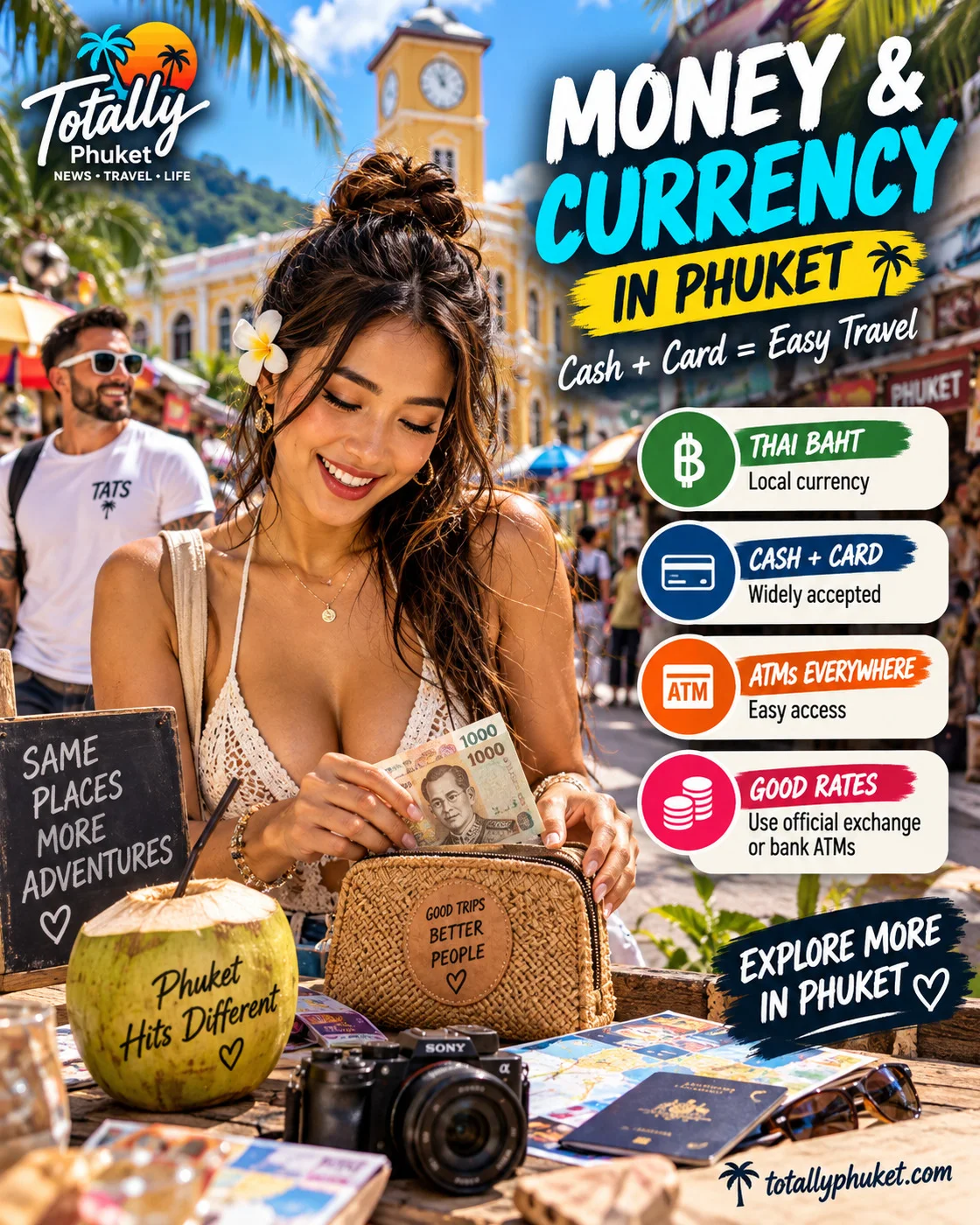
Phuket is easy to pay your way around once you use the right mix of cash and cards. Thailand’s currency is the Thai baht (THB), and cash still matters for markets, small restaurants, local transport and smaller businesses even though card acceptance is widespread in hotels, shopping centres and larger venues.
What money should you bring to Phuket?
Bring at least one widely accepted debit or credit card plus a second card stored separately. You do not need to arrive with your entire holiday budget in baht. A small amount for the airport transfer, food and the first day is useful, then you can withdraw or exchange more once you know your spending pattern.
Cash versus cards
Cards are common at resorts, supermarkets, malls, larger restaurants, hospitals and established tour operators. Cash remains normal at street-food stalls, fresh markets, some beach businesses, smaller massage shops, local taxis and songthaews. Even where a terminal is visible, a small business may set a minimum purchase or prefer cash, so do not rely on a phone wallet as your only payment method.
Using ATMs safely
ATMs are easy to find in Phuket’s main tourist areas. Foreign-card withdrawals can attract a Thai ATM fee plus whatever your own bank charges for overseas cash withdrawals or currency conversion. Check the fee shown on screen before confirming, use machines attached to banks or busy commercial premises where practical, shield your PIN and take your card, cash and receipt before walking away.
If an ATM offers to convert the withdrawal into your home currency, compare the displayed rate carefully. Your card network or bank may provide a better conversion when the transaction is processed in baht. The cheapest option depends on your card, so know your issuer’s foreign-exchange policy before travelling.
Changing foreign cash
Licensed bank branches and authorised money changers operate throughout Phuket. Rates vary by provider and by denomination, so compare the clearly displayed buying rate before exchanging a large amount. Airport and hotel desks can be convenient for a small arrival amount, while tourist districts usually give you more choice.
The Bank of Thailand regulates authorised money changers. Use an established counter that displays rates and gives a receipt rather than swapping cash informally. A passport or identification may be requested, particularly for larger transactions.
Thai banknotes and practical change
Common notes are 20, 50, 100, 500 and 1,000 baht, with 1, 2, 5 and 10 baht coins. Large notes can be awkward for a tiny purchase first thing in the morning or on local transport. Break them at supermarkets, convenience stores or established businesses and keep smaller notes for markets, songthaews and tips.
PromptPay and QR payments
PromptPay QR payments are extremely common in Thailand, but many short-stay foreign visitors cannot use the domestic system in the same way as a Thai bank customer. Some overseas banking apps support interoperable Thai QR payments, but coverage depends on your bank and country. Treat QR as a bonus if your own bank explicitly supports it, not as a substitute for cash and cards.
Paying deposits and large bills
For hotel deposits, medical bills, diving courses, vehicle rentals and other higher-value purchases, ask what payment method is accepted before committing. Keep receipts for deposits and rentals, photograph any signed agreement, and avoid handing over your passport as security when another reasonable deposit method is available.
How much cash should you carry?
Carry enough for the day rather than your whole trip budget. Split emergency cash and backup cards between secure locations, and use your hotel safe for items you do not need. In crowded nightlife or market areas, keep your wallet and phone in a secure front pocket or zipped bag.
Tipping in Phuket
Tipping is appreciated but is not a rigid percentage culture. Check whether a restaurant has already added a service charge. Rounding up a taxi fare, leaving small change for good service or giving a modest tip to a guide or driver is common when you are happy with the service, but it is discretionary.
Scams and payment disputes
Confirm prices before accepting a taxi, rental, tour or beach service. For card payments, check the amount and currency on the terminal before tapping or entering your PIN. If a transaction looks wrong, keep the receipt and contact your card issuer promptly. For a serious visitor dispute, Thailand’s Tourist Police hotline is 1155.
A simple payment strategy
A practical setup is one primary card, one backup card and a modest amount of baht. Withdraw or exchange in sensible batches, keep smaller notes available, and check your bank’s overseas fees before the trip. That gives you enough redundancy without carrying excessive cash.
Related Phuket planning guides
For the wider trip budget, see our Phuket budget travel guide and trip-cost and daily-budget guide. For payment-related disputes and common traps, read common scams and how to avoid them.